
Leading Through Innovation, Building Dreams for the Future
As technology advances by the day, STEAM education has become a key pillar in nurturing outstanding talent. As a school that keeps pace with the times, our school is committed to helping students master the core generic skills needed in the 21st century, developing their critical thinking, problem-solving, communication and collaboration, and creativity and innovation. Since launching our STEAM education programme in 2018, we have created a platform for growth full of possibilities and challenges, through a diverse curriculum, cross-disciplinary teaching and cutting-edge learning facilities. Here we take a closer look at how this platform not only carries the mission of education but also serves as a starting point for building dreams for the future.
STEAM Fully Integrated into Learning: From Ideas to Practice
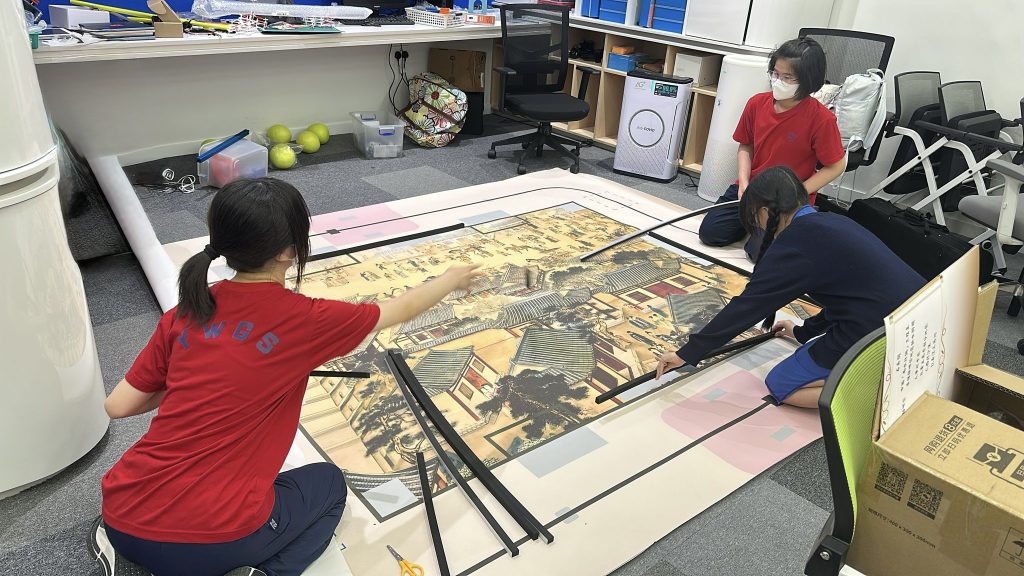
Our school currently runs its own school-designed STEAM curriculum in S1 and S2, guiding students to explore the world of technology. The curriculum covers 3D printing, virtual reality (VR), augmented reality (AR), the Internet of Things (IoT), robotics and coding (including micro:bit) and artificial intelligence (AI), so that students can unleash their creativity and master a wide range of technology skills. In the product design and prototyping unit in S2, students go through the Engineering Design Process. Through hands-on making, they gain rich practical experience, apply cross-disciplinary knowledge flexibly and build 21st-century generic skills.
AI Education: Bringing Knowledge and Practice Together
In promoting AI education, our school keeps pace with the times. The school takes an active part in the CUHK Jockey Club “AI for the Future” Project and works closely with it to integrate AI teaching content systematically into the STEAM and Computer curricula. The curriculum covers everything from the basic concepts of AI and its far-reaching impact on society to ways of using AI ethically. The topic “AI and the Future” goes further, discussing how AI may affect the structure of jobs, among other themes.
Beyond theory, students operate image recognition and speech recognition technologies to understand the basic principles of how AI perceives the world. Hands-on work with generative AI tools (such as text and image generation) also lets them explore the potential applications of AI first hand. These in-depth learning experiences not only help students understand AI technology systematically, but also develop their ability to use AI tools safely, ethically and responsibly in daily life, building the right values for technological innovation.
Cross-disciplinary Teaching: Innovation that Brings Knowledge Together
Our school actively promotes cross-disciplinary teaching in STEAM education. Concrete examples include:
- in History lessons, AR is used to create interactive materials that bring scenes of ancient civilisations to life and reinforce learning;
- in Geography lessons, VR turns sustainable community design proposals into three-dimensional models, strengthening students’ practical understanding of spatial planning;
- in STEAM, scientific investigations on renewable energy and the uses of electricity are closely linked to Integrated Science topics, and students apply key skills learnt in Mathematics, such as data handling and working with formulae.
This curriculum design lets students, through hands-on work, apply skills gained in different subjects flexibly to solve problems, deepening how they bring knowledge together and put it to use.
A Wide Range of STEAM Enrichment Courses: Sparking Interest in Technology
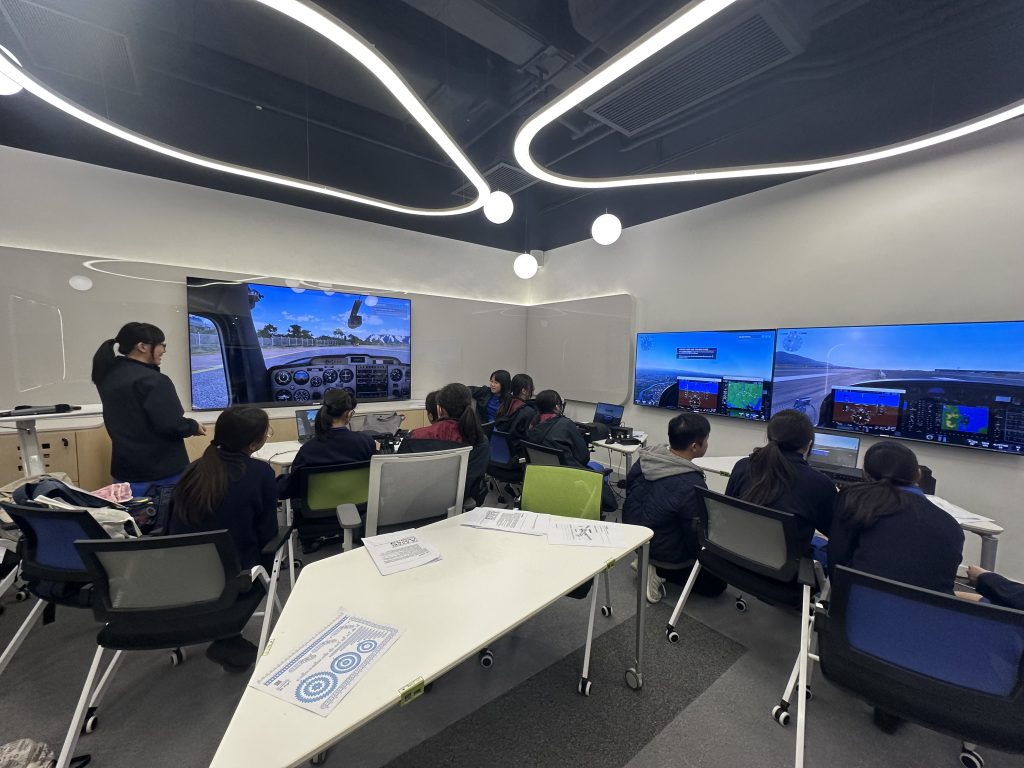
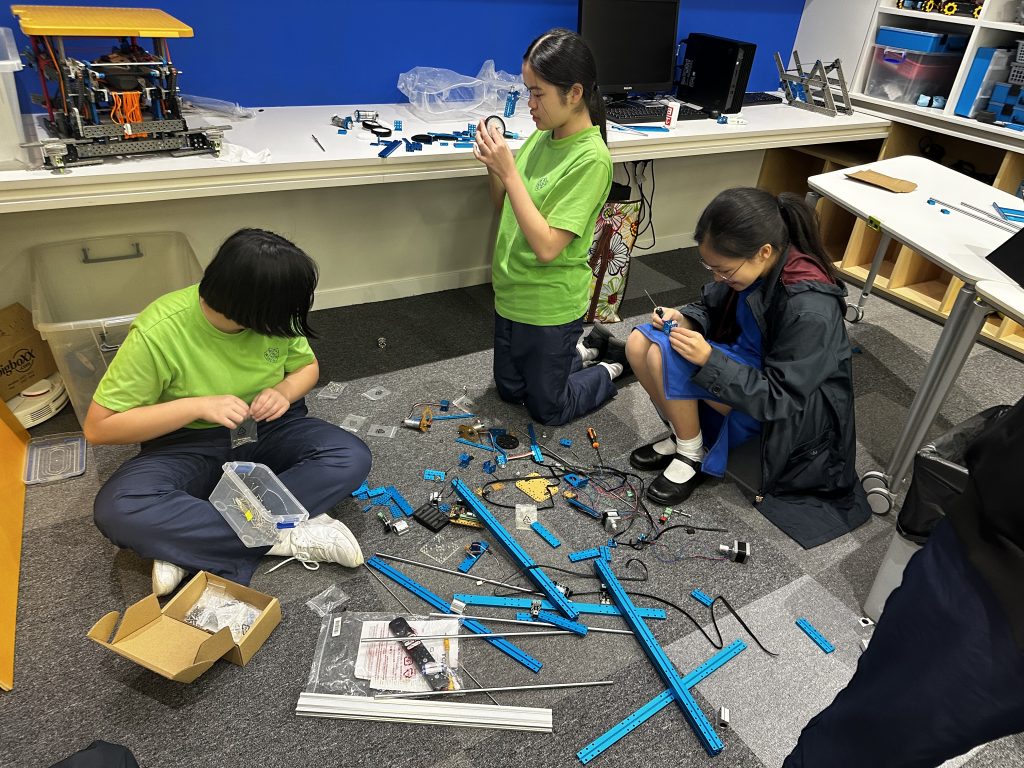
In addition, to cater for students with a strong interest in STEAM, and with support from the government’s Digital Policy Office and the Life-wide Learning Fund, the school has set up a rich variety of STEAM enrichment courses. They cover popular, cutting-edge fields such as aerial photography and drone programming, aviation knowledge and flight-simulator piloting, and robotics. These courses let more students discover where their interests lie and gain valuable learning experiences beyond the classroom, laying a solid foundation for their future studies and careers.
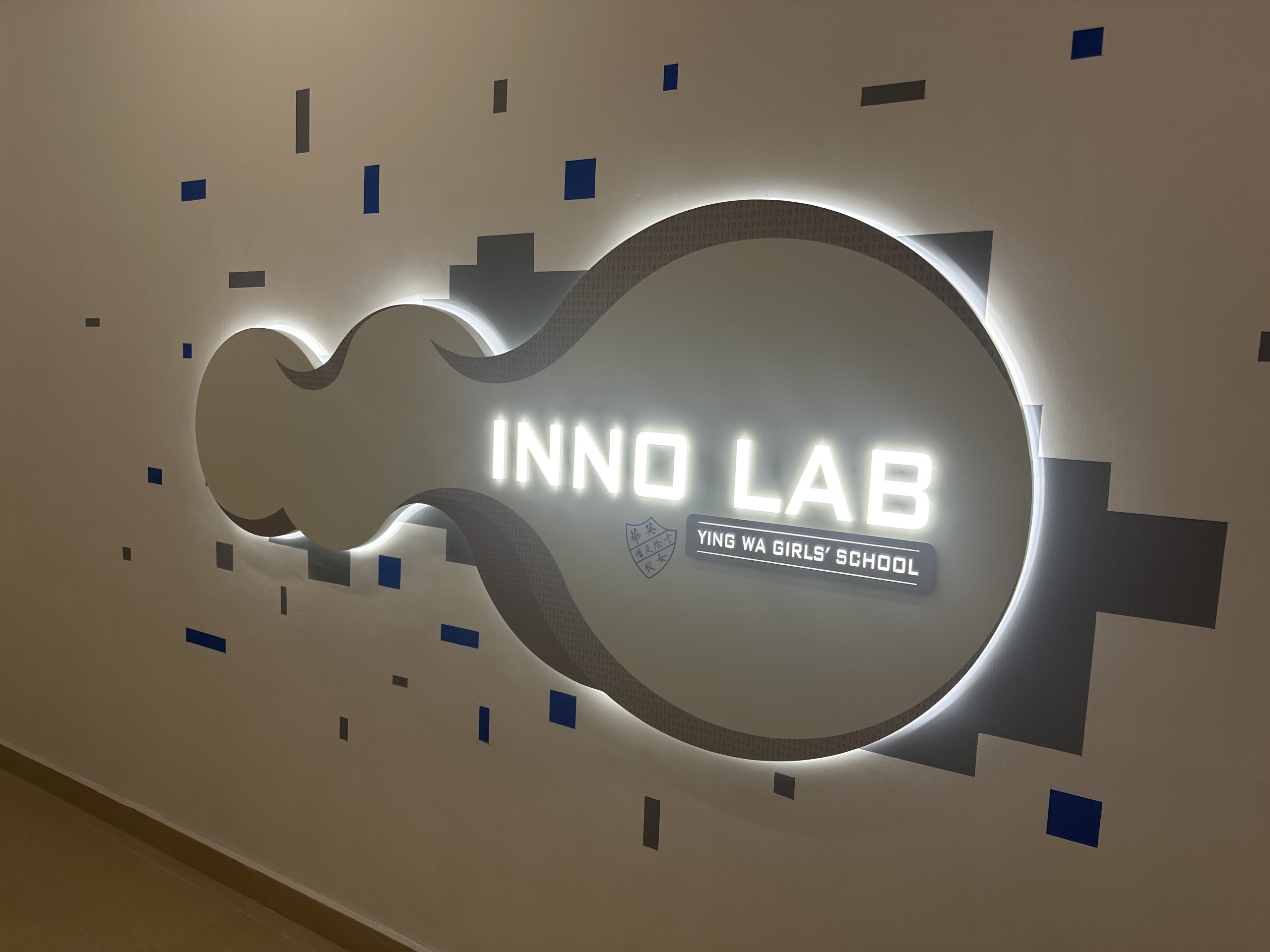
InnoLab: Where Innovation Comes to Life
The newly renovated InnoLab at our Breezy Path campus is an important base for STEAM education at our school. This modern space is fitted with a range of advanced equipment, including robotics kits and professional-grade flight simulators. This equipment supports cross-disciplinary learning and keeps our STEAM students enthusiastic, while giving students an ideal place to turn creative ideas into real works.
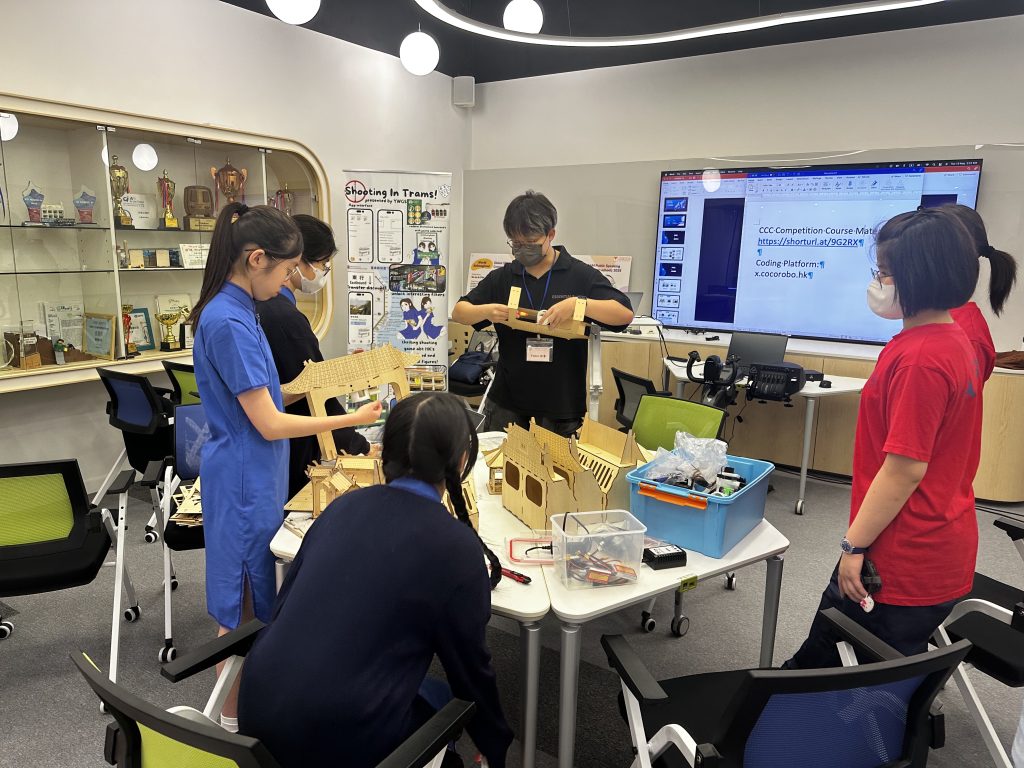
Students often take part in all kinds of training sessions and workshops, and need to concentrate on designing and making competition entries and prototypes. With all the equipment in one place, the InnoLab is clearly the right place for this, giving rise to countless creative ideas and outstanding works. As our STEAM teachers put it:
“This is not just a place to learn about technology; it is an important environment for developing hands-on skills and innovative thinking.”
STEAM Activities
Robotics


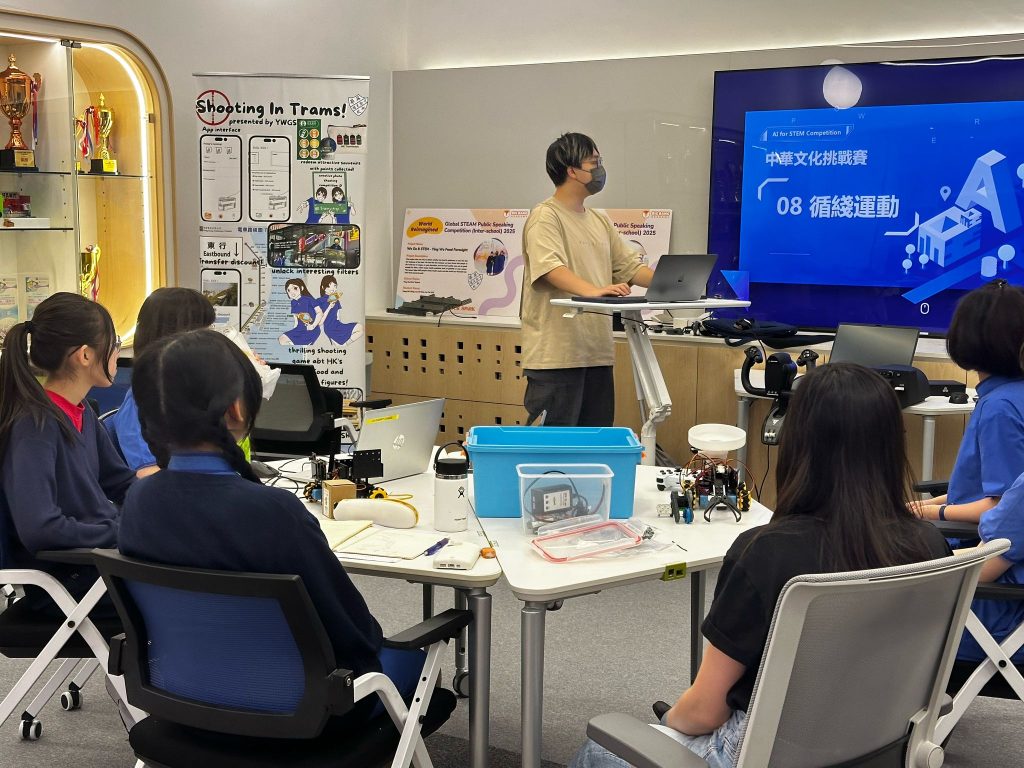
Using robotics kits in the Inno Lab, students design, build and program their own robots, putting engineering design, coding and teamwork into practice. They take part in training sessions, workshops and competitions, turning creative ideas into working machines.
Aviation & Flight Simulation


Students learn the principles of flight and discover the world of aviation, then take the controls of the professional-grade flight simulators in the InnoLab.
Drone Coding


Students learn to program drones to fly set routes and complete missions, and try their hand at aerial photography — combining coding, mathematics and creativity.
STEAM Team


Our STEAM Team brings together students who love to tinker, code and invent. Training in the InnoLab, members work with 3D printing, micro:bit coding, the Internet of Things and AI tools, and design and build prototypes for STEAM competitions.
STEAM Tour
Learning goes beyond the classroom: on STEAM tours students visit universities, science and technology centres and innovative companies, and see how what they learn is used in the real world.


Looking Ahead: Innovation Without Limits
Looking ahead, the school will continue to deepen the reform and innovation of STEAM education:
“We plan to widen the range and depth of cross-disciplinary integration, bring more STEAM elements into the teaching of other subjects, and encourage students to use cross-disciplinary knowledge to solve complex problems in real situations.”
Indeed, in this new era full of opportunities, the seeds of innovation and technology sown by STEAM education will surely grow into an important force driving society forward.